MSc in Plant Biology – Plant Health
Faculty of Sciences, Angers | 2022 – 2024

Overview
This Master’s program provided specialized training in Plant Health, combining advanced plant physiology with the study of (a)biotic interactions. The curriculum also included an introductory exposure to Data Science—covering basic programming and modeling—which helped me start bridging the gap between biological experimentation and computational analysis.
Core Competencies
Plant Health & Pathology
The core of the degree focused on the complex interactions between plants, microbiota, and their environment.
Pathology & Immunology: I studied the biology of bioaggressors (detection and diversity), host-parasite interactions, the mechanisms of (re)-emerging diseases, and plant innate immunity signaling pathways—pattern-triggered immunity (PTI) and effector-triggered immunity (ETI).
Microbial Ecology: Analysis of plant-associated microbial communities (microbiota) and the balance between parasitic and mutualistic strategies. This included studying Synthetic Communities (SynComs) to model microbiome interactions.
Holobiont Concept: Considered the plant and its associated microbiota as an integrated functional unit (host + microbiome) shaping health, stress responses, and disease dynamics.
Protection Strategies: I examined both conventional and genetic methods for plant protection, alongside the study of secondary metabolites involved in defense.
Genetics, Genomics & Physiology
I acquired a systemic view of plant development and improvement.
- Omics & Breeding: Coursework covered Plant Genomics and Genetics, with a specific focus on quantitative methods like QTL mapping and GWAS (Genome-Wide Association Studies).
- Physiology: I deepened my understanding of hydro-mineral nutrition, crop development, and signaling pathways in cultivated plants.
- Product Quality: Assessment of plant product quality and biomass elaboration.
Data Science & Modeling
This program provided foundational training in computational and statistical approaches.
Programming & ML: Acquired strong foundations in R programming and theoretical concepts of Machine Learning.
Bioinformatics: Theoretical introduction to omics concepts (e.g., RNA‑seq), not full data-management or analysis pipelines.
Statistics: Advanced experimental design and statistical analysis.
Key Academic Projects
Beyond theoretical coursework, the program emphasized practical application through hands-on projects:
Presentations & Vulgarisation
Throughout this Master’s program, I delivered several scientific presentations on specialized topics in plant biology, genetics, and pathology. These oral communications enhanced my ability to synthesize complex information and communicate scientific concepts effectively.
Laboratory Reports Examples
Throughout the program, I completed numerous practical laboratory sessions that reinforced theoretical concepts and developed hands-on experimental skills. Below are two representative lab reports demonstrating my ability to design experiments, analyze data, and communicate scientific findings.
Professional Research Experience
This Master’s program included two significant research internships that allowed me to apply theoretical knowledge in real laboratory settings and develop practical research skills.
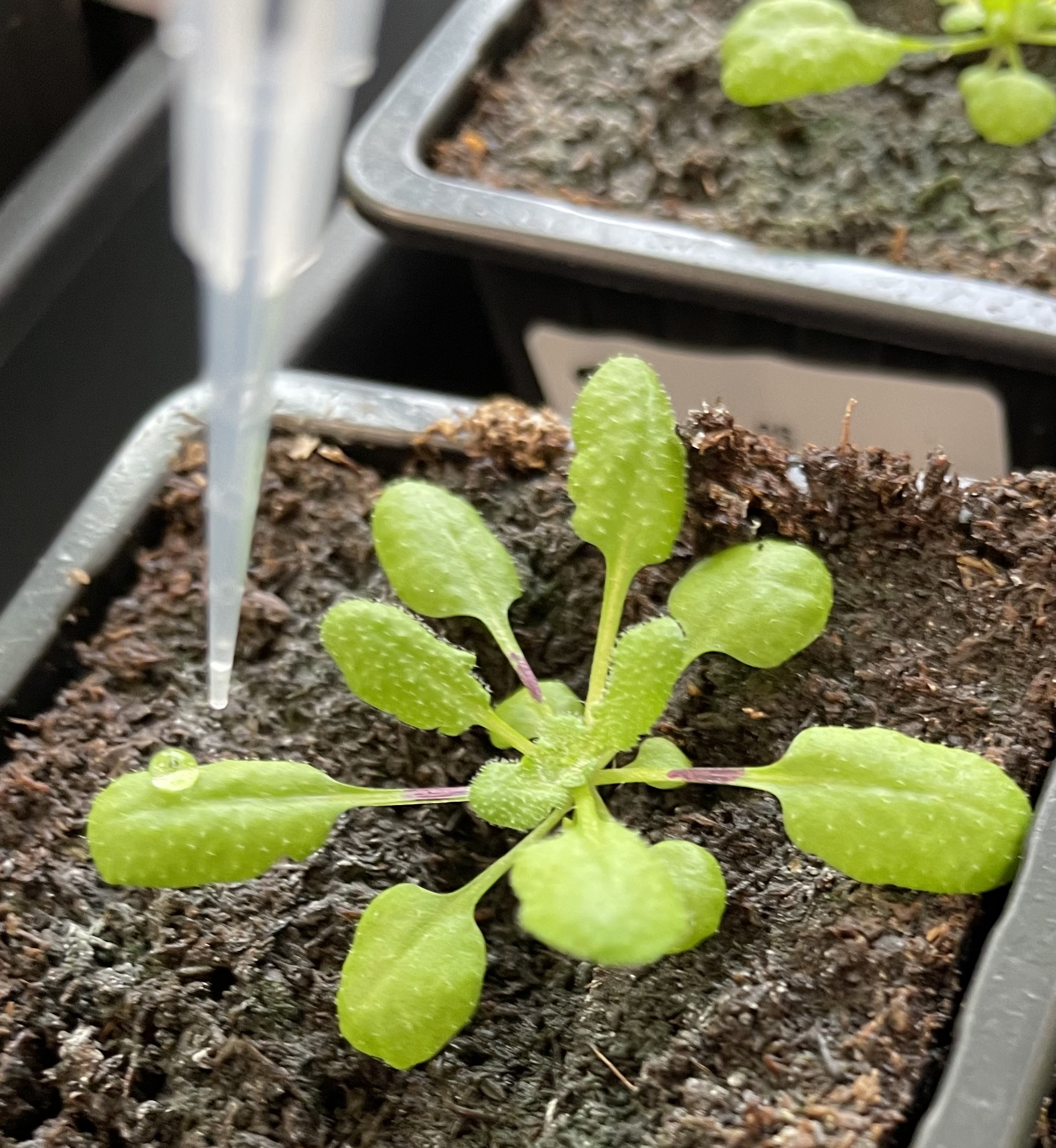
MSc Research Intern – Plant-Pathogen Interactions & Phytocytokines
May – July 2023 | UMR 1345 IRHS, Angers
Phenotyped Arabidopsis thaliana resistance to Alternaria brassicicola in phytocytokine mutants identified via transcriptomics, as part of the ANR STRESS-PEPT project.
Supervised by Thomas Guillemette, Philippe Grappin (FUNGISEM team) & Sébastien Aubourg (BIDEFI team)
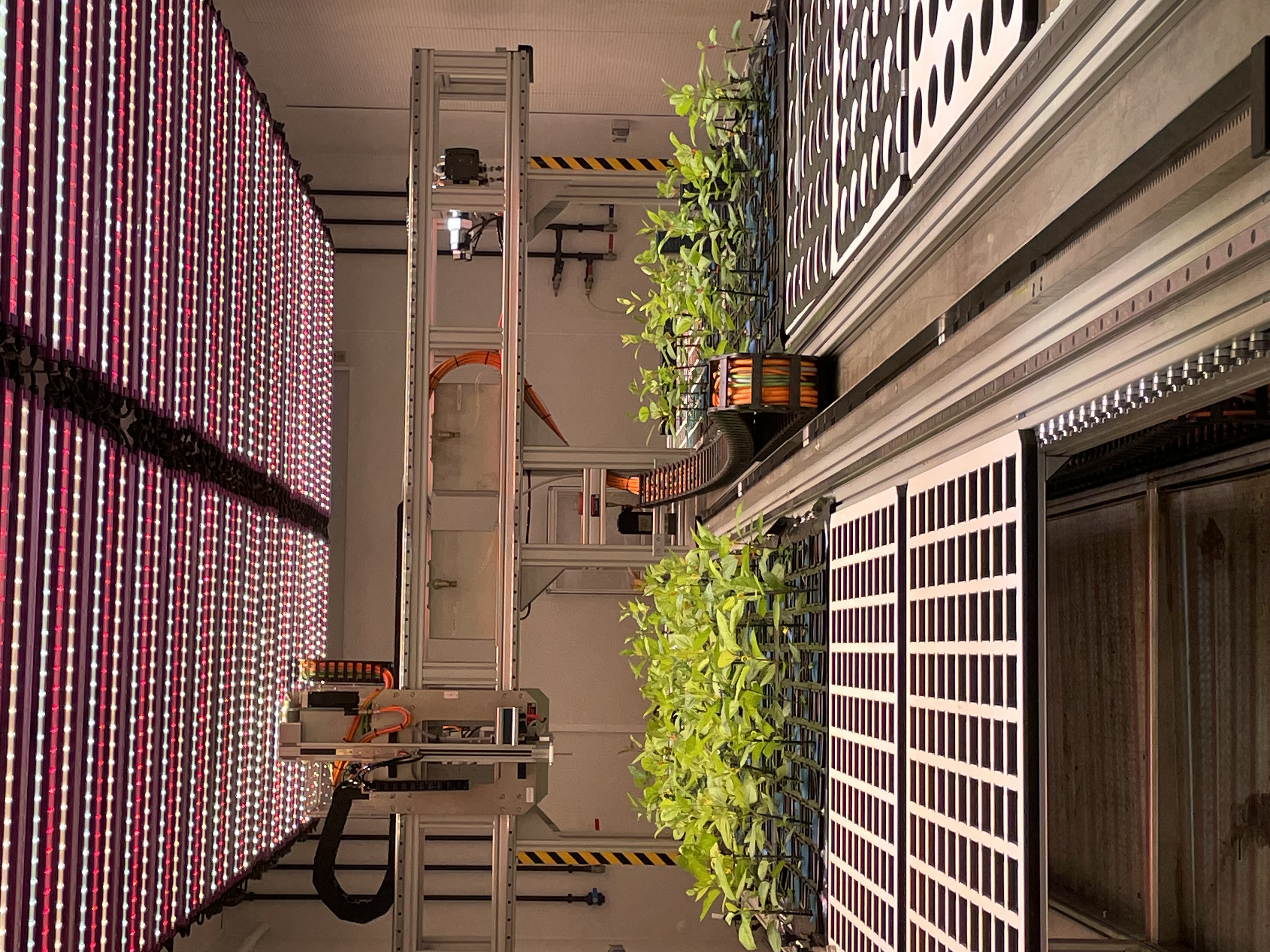
MSc Research Intern – Plant Phenotyping & Growth-Defense Trade-offs
Jan. – June 2024 | UMR 1345 IRHS, Angers
Developed semi-automated phenotyping of apple trees using robotic imaging to analyze growth-defense trade-offs, including monitoring of growth and resistance to Erwinia amylovora.
Supervised by Florent Pantin, Bao-Huynh Nguyen & Romain Larbat (RESPOM team)
Complementary Bioinformatics Training
Motivation for MSc in Bioinformatics
This Master’s in Plant Health gave me strong theoretical foundations in statistics, machine learning concepts, introductory R programming, genetics/genomics and phenotyping. However, it did not train me to manage and analyze omics datasets in practice (e.g., RNA‑seq, metabolomics).
To develop additional research competencies and bridge the gap between experimental biology and computational data analysis, I pursued a specialized MSc in Bioinformatics applied to Biomedical and Health Sciences. This complementary training not only equipped me with the advanced bioinformatics skills necessary to independently conduct modern biological research—where high-throughput data generation and computational analysis have become essential—but also allowed me to expand my scope toward human biology and medicine, a long-standing interest of mine.
Through the CoCoBi minor (Complementary Skills in Bioinformatics), I gained direct admission to this intensive M2 program. I developed expertise in the analysis, interpretation, and visualization of massive omics data, with applications spanning diagnostics, biomedical research, and fundamental biology. I also strengthened my skills in statistics and machine learning, and learned rigorous coding practices following the FAIR principles.