Medical Studies Project – “Passerelle” Bridge Program
Independent Preparation & Clinical Immersion
Overview
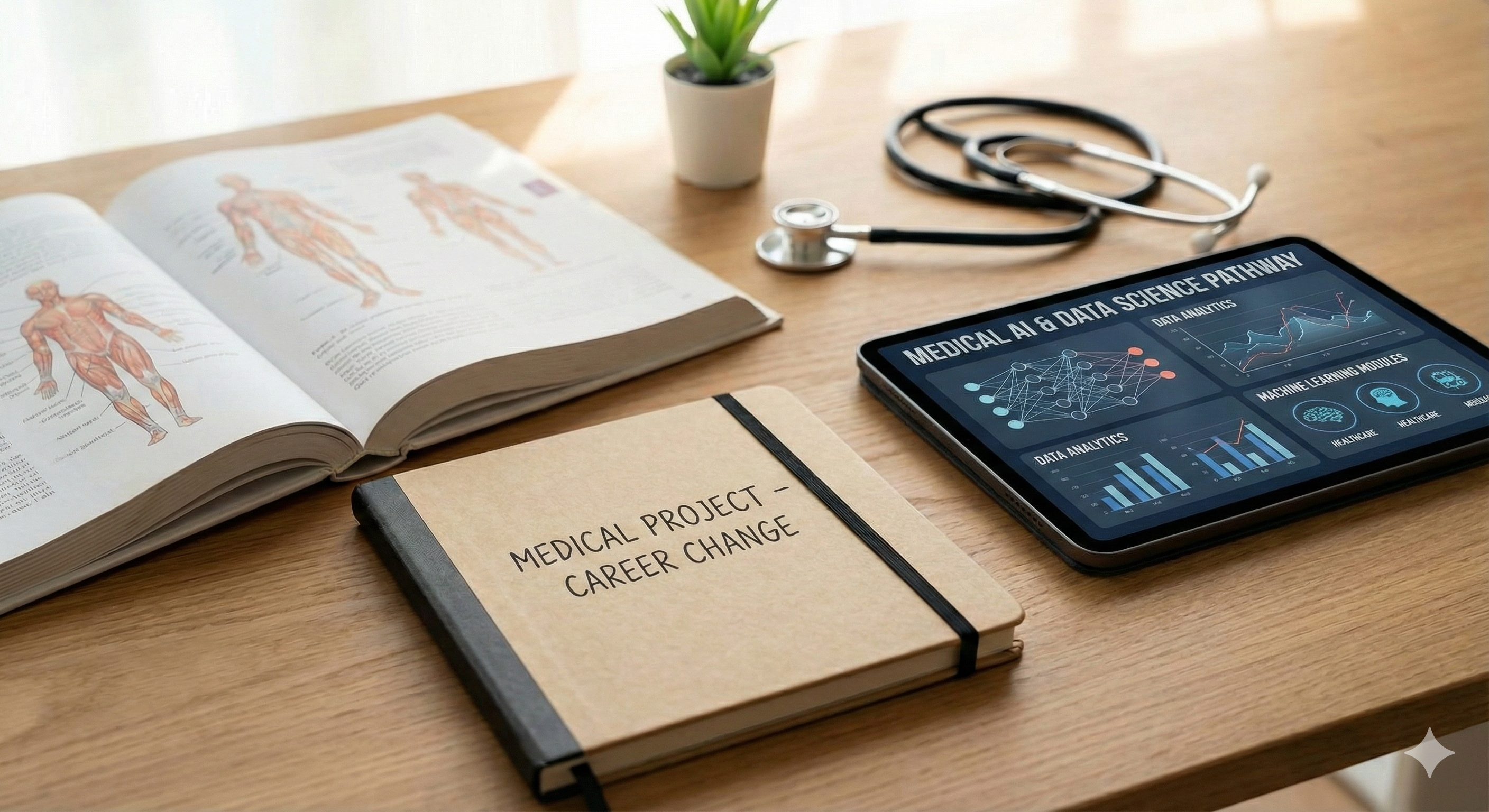
In France, the “Passerelle” (Bridge) procedure allows high-level graduates with backgrounds in sciences, engineering, or research to bypass traditional first-year pathways and enter directly into the 2nd or 3rd year of medical studies.
With a strong academic background as a biologist and bioinformatician, I am actively preparing my application for the September 2027 intake in Rennes. To ensure my success and readiness for the high-intensity medical curriculum, I have undertaken a rigorous self-directed preparation program combining clinical immersions and advanced academic study.
🏥 Clinical Immersions & Healthcare Experience
Understanding the reality of patient care and hospital workflows is crucial for a future physician. I have completed early clinical observation internships to experience different facets of healthcare, and I am actively planning further immersions:
Medical Genetics (2 weeks, April 2026) | CHU de Rennes
Supervised by Dr. Hakim Bouazzaoui (Molecular and Somatic Genetics Lab)
Followed patient consultations, genetic counseling, multidisciplinary clinical meetings on rare diseases, and genomics-based diagnostics.Surgical Oncology (2 days, April 2026) | Clinique de l’Anjou, Angers
Supervised by Dr. Nicolas Paillocher (Oncological Surgeon)
Immersed in breast cancer surgical oncology consultations and stood in the operating theater to observe complex surgeries.Future Immersions: I am actively organizing additional clinical observations in primary care (general practice) and other hospital specialties to broaden my perspective on patient management and healthcare systems.
For in-depth details about my observations, activities, and reflections during these clinical experiences, please visit my dedicated Clinical Observation Internships page.
📚 Independent Academic Preparation
To build a solid foundation and hit the ground running in medical school, I have been independently studying core subjects of the medical curriculum, spanning early-year basics to advanced clinical preparation.
My study method relies on a rich combination of official university reference books, medical prep school courses, student tutoring materials, and high-quality online medical resources:
1. Human Anatomy & Physiology
- Anatomy Focus: Systematic study of the human body’s structures and anatomical terminology.
- Topics studied: Musculoskeletal system, cardiovascular anatomy, respiratory system, nervous system, and abdominal viscera.
- Physiology Focus: Independent study of functional mechanisms, including cardiovascular hemodynamics, respiratory regulation, renal function, and endocrine integrations.
- Approach: Utilizing official medical textbooks, atlas materials, and 3D modeling tools to master spatial and functional relationships.
2. Embryology & Development
- Focus: Early human development, gametogenesis, fertilization, and organogenesis.
- Topics studied: Spermatogenesis and oogenesis, meiosis dynamics and anomalies, the first weeks of embryonic development, and early tissue differentiation.
- Aesthetic Link: My academic notes are documented on this site in Reproduction and Embryology course.
3. Advanced 6th-Year Medical Curriculum Items (EDN / ECN)
Rather than limiting myself to early-year fundamentals, I have taken the initiative to study advanced clinical cases and medical items from the 6th-year National Exams (EDN/ECOS): - Clinical reasoning: Studying official national college reference manuals (Collèges des Enseignants Nationaux) and LiSA fiches to understand diagnostics, risk factors, clinical examinations, therapeutics, and emergency management across major specialties. - Medical Database & Knowledge Graph Project: I built a structured personal database to compile, link, and revision-control EDN knowledge. This project involves an Neo4j Graph Database: Modeling relationships between diseases, symptoms, diagnostics, and treatments.
4. Strong Foundations in Basic Medical Sciences
Thanks to my university degrees (BSc and MSc in Biology) and my specialization in Bioinformatics, I already possess highly advanced knowledge and robust foundations in Genetics, Biochemistry, Cell Biology, and Molecular Biology. Having already mastered these core scientific prerequisites—especially the complexities of genomic data and molecular pathways—I do not need to spend time constantly revising them. This allows me to focus my preparation entirely on specialized medical topics, anatomy, embryology, and clinical physiology.
💡 The Value of a Dual Profile
My dual background as a biologist and data scientist gives me a unique lens for medicine. I am trained in critical thinking, experimental design, and analyzing massive data structures (such as single-cell transcriptomics or complex networks).
By combining this scientific rigor with clinical skills, my long-term goal is to contribute to personalized medicine and clinical research, acting as a direct bridge between laboratory discoveries and patient bedside care.